
Blog
Latest Technical Articles
-
Capabilities of Bond Testing: Pitch-Catch, Mechanical Impedance Analysis, and Resonance Bond Testing
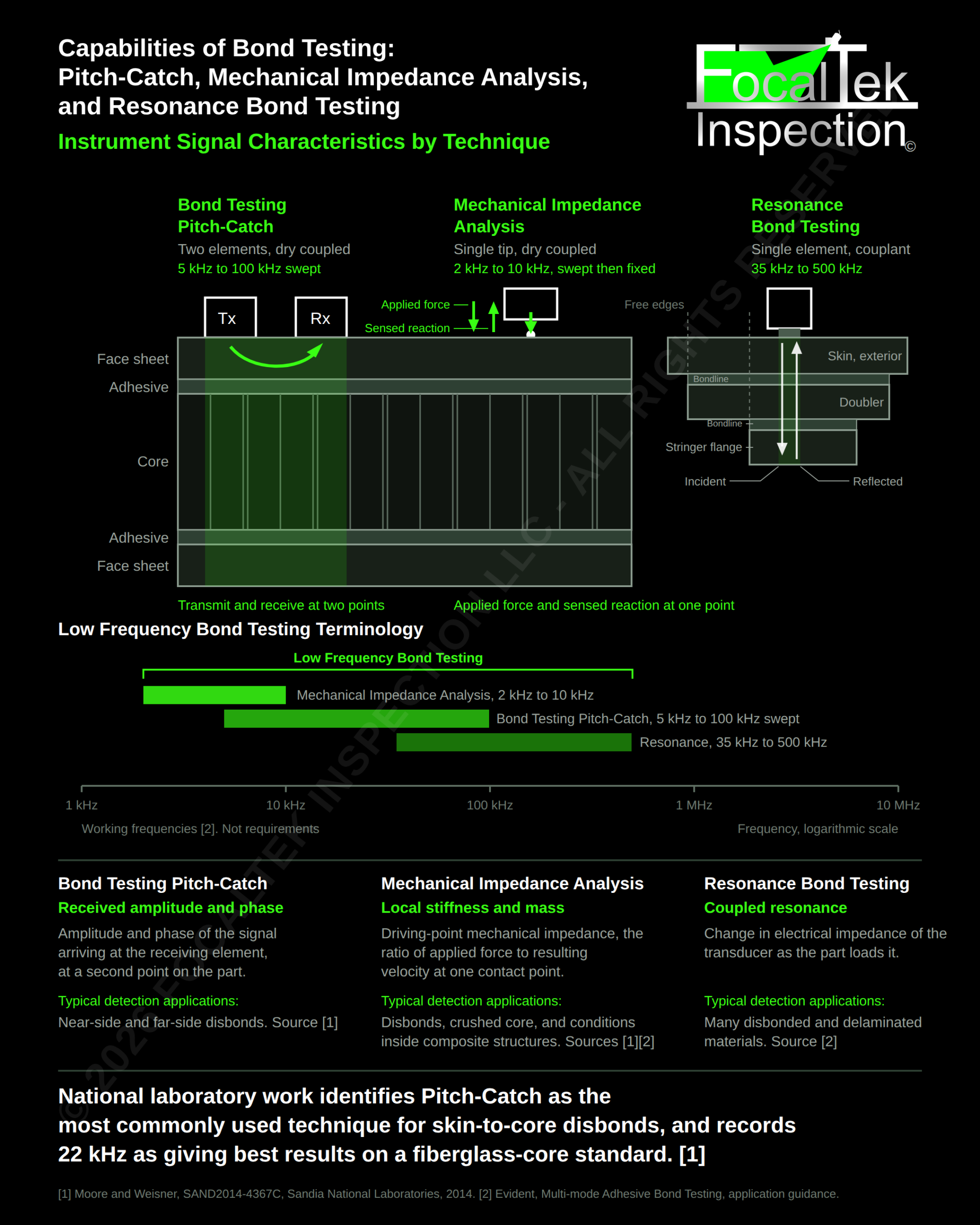
Figure 1. Instrument Signal Characteristics by Technique, with working frequencies. Sources as listed on the figure and in the article. Scope This article addresses the capabilities of the different Bond Testing techniques and the instrument signal characteristics that are used in each of the techniques, as well as the frequency and probe variables that are…
-
Delamination, Disbonding, and Porosity Are Not the Same Inspection Problem
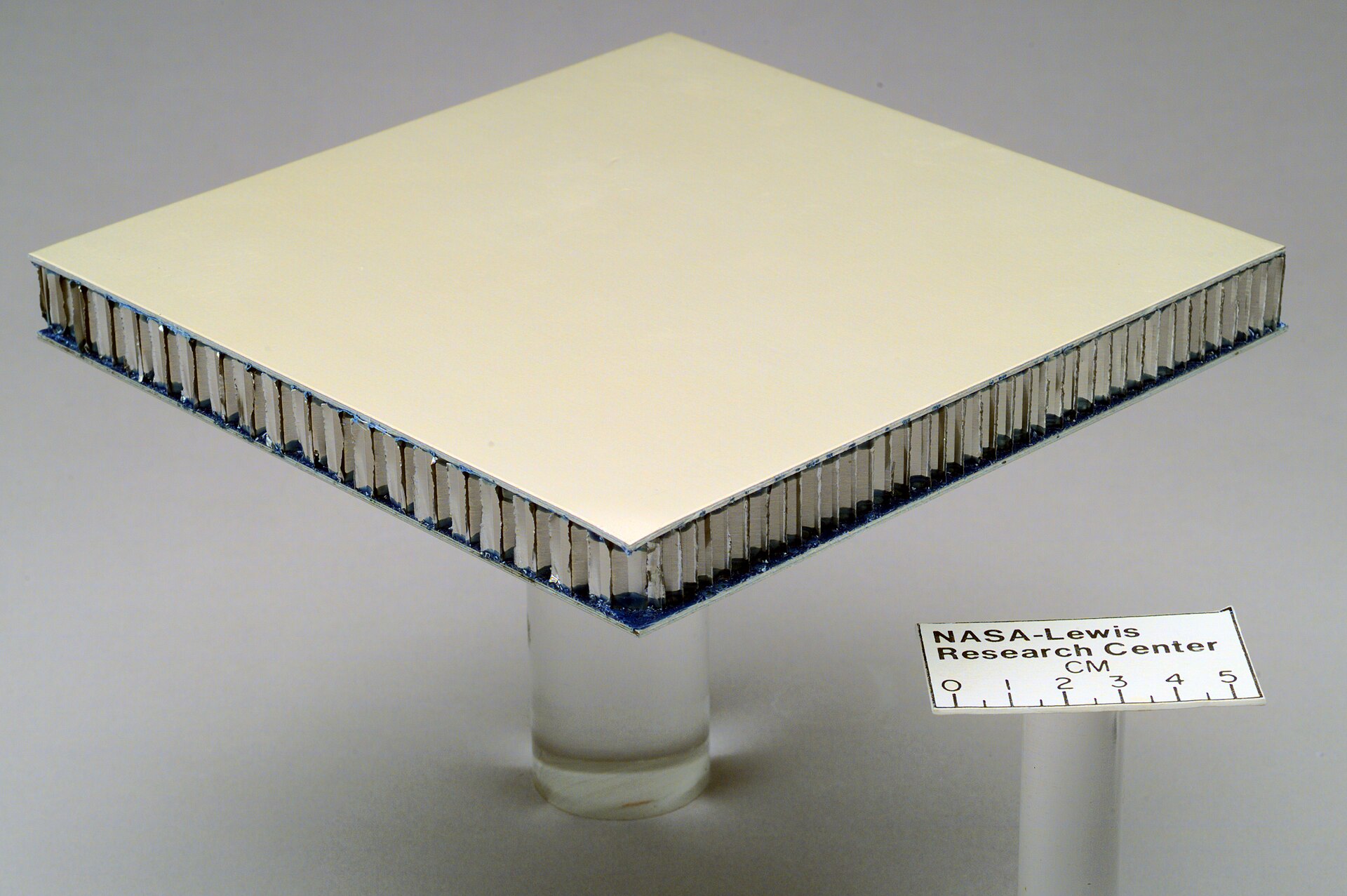
Similar looking ultrasonic responses can come from very different changes in a composite structure. A 12 dB amplitude reduction in a composite does not identify the damage mechanism. It identifies a change in the acoustic response. That change may be associated with an interply delamination, a bonded-interface separation, distributed porosity, a thickness transition, local laminate…
-
The Inspection Is Complete. The Question Still Isn’t Answered.

The hidden cost of an indeterminate NDT result The scaffolding is down. The insulation is back on. The NDT crew has demobilized. Engineering opens the report and finds a response that could not be adequately characterized. Now everyone has the same question: What exactly did we find? At that point, the cost of the original…
-
AUT Corrosion Mapping: Turning Individual Thickness Readings Into a Damage Profile

An AUT corrosion map should do more than identify the lowest thickness on a component. The useful question is not simply, “What is the minimum wall?” The useful questions are where that minimum is located, how the wall changes around it, what process or geometric features are nearby, whether the damage pattern is consistent with…
-
What an NDT Level III Is Responsible for Before the First Scan Begins

Photo: National Transportation Safety Board (NTSB), public domain What if someone in an NDT, inspection, quality control, quality assurance, asset integrity, or engineering setting says, “Level IIIs aren’t that important,” or “I’m not worried about what the Level III thinks”? That should raise a question. The issue is not whether a Level III should win…
-
The Component Was Accessible. The Area of Interest Was Not.

A weld can be fully exposed and still be difficult to examine. That usually becomes obvious when the probe is coupled to the component. And now, well, a technique revision may be needed. A drawing may show enough room on both sides of the weld. In the field, weld reinforcement, curvature, a nearby fitting, support,…
-
Start With the Failure Mechanism, Not the Test Equipment

Why effective NDT technique selection begins with the condition being evaluated In nondestructive examination, it is easy to begin with the equipment. What instrument is available? Which probe should be used? Should the examination use ultrasonic testing, eddy current testing, phased array ultrasonic testing, full matrix capture & total focusing method, or another method? Those…
-
Finding an Indication Is Not the Same as Understanding It

Let’s bring some clarity to WHY detection, sizing, characterization, and interpretation are different examination objectives In nondestructive testing, finding an indication may be only the beginning of the examination process. An examination technique may produce a repeatable response from an area of interest, but the presence of that response does not necessarily answer the questions…
Stay Informed on Specialty NDT
Subscribe to receive technical articles from the experts at Focaltek Inspection LLC covering advanced inspection techniques, indication characterization, inspection challenges, and practical NDT applications.

NDT Level III Services
When I needed a second set of Level III eyes on a NAVSEA/Electric Boat UT procedure, Anthony turned a full marked-up review around overnight, with comments in the PDF and in the highlights so nothing got missed. His UT knowledge across shear wave, phased array, and TOFD is deep, and he catches the things that become audit findings. FocalTek is the first call I make when I need a technical peer I can trust.
Mike Gardner
NDT Level III Review
FocalTek was one of the first companies to put TRACE through real-world use. Anthony didn’t just kick the tires; he sent step-by-step bug reports with screenshots, told us which workflows actually mattered to a working Level III, and came back to re-test after each fix. A lot of what makes TRACE useful today for NDT compliance tracking traces directly back to his feedback. Sharp, practical, and generous with his time.
TRACE Admin
Excellent Training and NDT Level 3 Knowledge
I have had the pleasure working with Anthony. His attention to detail, understanding of NDT theory and integrity are second to none. My son took his online ultrasonic thickness class and is now working in the industry. He has a better understanding of ultrasonic theory than most of his counterparts thanks to Focaltek’s robust online training program.
John Clardy
Contact Us
Contact us to take care of your nondestructive testing and inspection services.
We appreciate our customers, so feel free to contact us regarding nondestructive testing and inspection.
Request a quotation today.
Information such as layup, adhesive system, bondline thickness or joint geometry is frequently proprietary and may be export controlled. Contact Focaltek before transmitting it, so that the appropriate non-disclosure and export control arrangements are in place.